Why Some Businesses Will Not Exist In 10 Years
The 4 Reasons Why Most Businesses Won't Survive the Next Decade: Are You Prepared?
Synced from the Strategy Patterns Substack archive (2022–2023). Several earlier posts in that series were co-bylined.

According to Professor Carlota Perez, who has done seminal work on technological revolutions, each technological revolution changes the underlying socio-economic structure of organizations. Since most organizations are stuck in inertia, they face major existential threats. Below, I share four major reasons pointing in that direction.
The Dire Need of Transformation Across Industries
According to an Accenture report studying 10,000 businesses across multiple industries, 71% of businesses need to transform immediately. This call to action is based on the number of firms existing in the marketplace and how many of them cease to exist. The 10-year surviving list of the S&P Global 100 is also sobering, with only a few companies still existing today from the past 50 years.
Profits are Shrinking Worldwide
According to a working paper by the Sante Fe Institute based on business performance figures from the World Enterprise Survey (covering small to midlevel companies across 100 countries), the average profit of traditional firms is declining.
The Low-Performing Companies Are More Trapped Than Ever
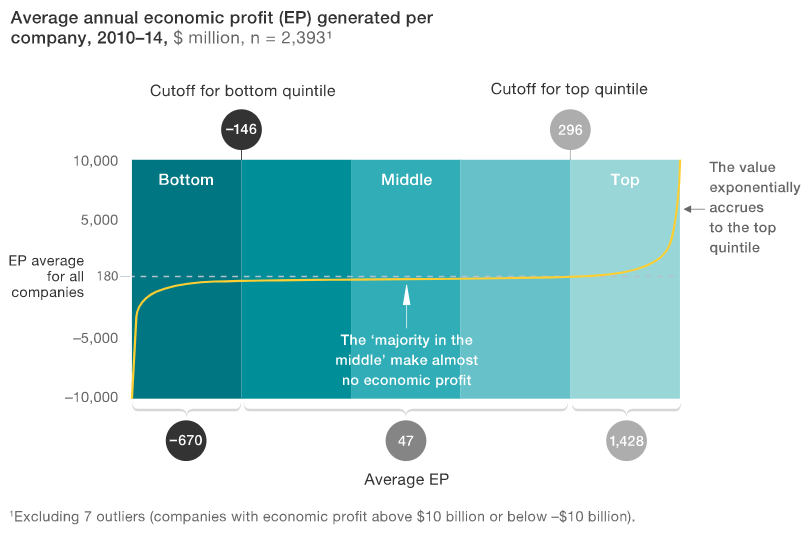
According to research done by McKinsey, the hockey-stick research concludes:
We are living in a winner-take-all world. 90% of the economic profits are captured by the 10% of companies in the cohort.
It is getting steeper. In an exponential world, the odds of you losing out are more than you are going to win.
Because of many economic cyclical hurdles and inertia, you as an organization need to deal with.
According to one McKinsey report: “In effect, the crisis has accelerated a trend that was already present. Between December 2018 and May 2020, the top quintile of companies grew its total market-implied annual economic profit by $335 billion, while companies in the bottom quintile lost a staggering $303 billion. While the specific numbers can fluctuate from day to day, the larger trend is unmistakable: a gap is opening up, and it’s rapidly expanding. That’s a pattern that has been evident since 2010. Now, the COVID-19 pandemic is pushing it to entirely new levels.”
The Rise of Unicorns
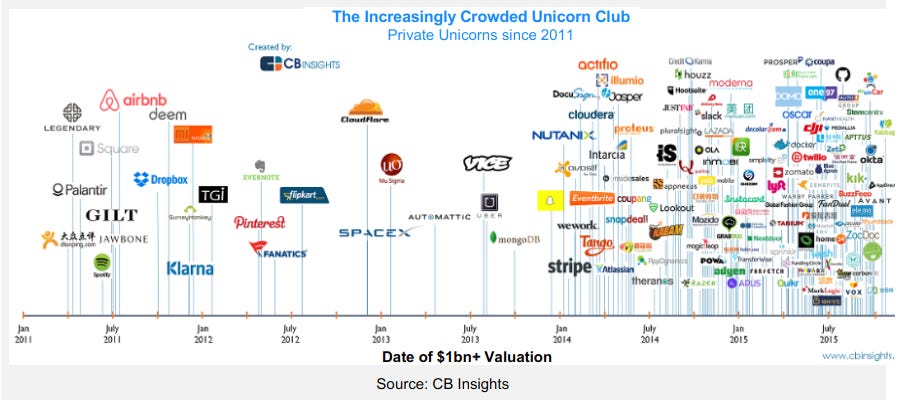
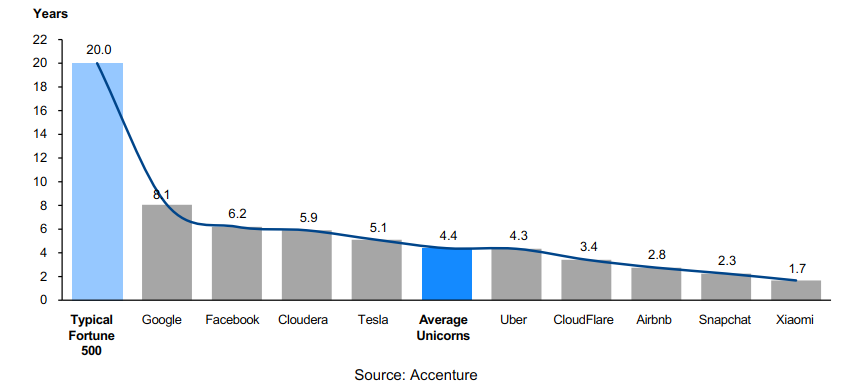
It is now a fact that the times we are living in are volatile and uncertain. The new dynamics have not only pushed back the life of the traditional S&P company, but it has also caused it to become slower. On the contrary, the explosive rise in unicorn tech companies is leveraging technology and new organizational structures to work fast and better, hitting the billion-dollar mark way earlier than an S&P company.
If you're facing issues of stalled growth or turbulence, follow a short assessment I have shared below to gauge your core business.
Strategic Action: Three Most Crucial Indicators of Downturn
It is important to understand the mean behind the indicator rather than just take them as accounting metrics.
Cash cycle: Cash cycle tells you how important you are to the buyers and suppliers such that they are willing to pay you before everyone else.
Revenue: Revenue is a metric that shows your position in the market.
Cost: Cost is a metric that shows how much you are in control of your business and if the business can survive in the same market and with the same stakeholders.
Based on these variables, the most telltale signs that your business is facing existential challenges are:
Increasing Costs, Short Cash Cycle [High Alert]
Increasing Costs & Lower Revenues [High Alert]
In conclusion, organizations of all sizes and industries today face major existential threats. The need for transformation is dire, and many businesses are struggling to keep up with the pace of the technological revolution. Shrinking profits and trapped low-performing businesses are just some of the challenges that companies must navigate. However, the rise of unicorn tech companies provides hope and a different approach to leverage technology and new organizational structures to work faster and better. Businesses that want to survive and thrive in today's world should take a careful look at their core business and assess their position in the market using crucial indicators such as cash cycle, revenue, and cost to avoid being left behind.
Letters · Substack
Get the next letter by email.
If something here was useful, or you think I missed something, subscribe on Substack and reply to any letter.
Hosted on Substack. Reply to any letter. Unsubscribe anytime.
Further Reading